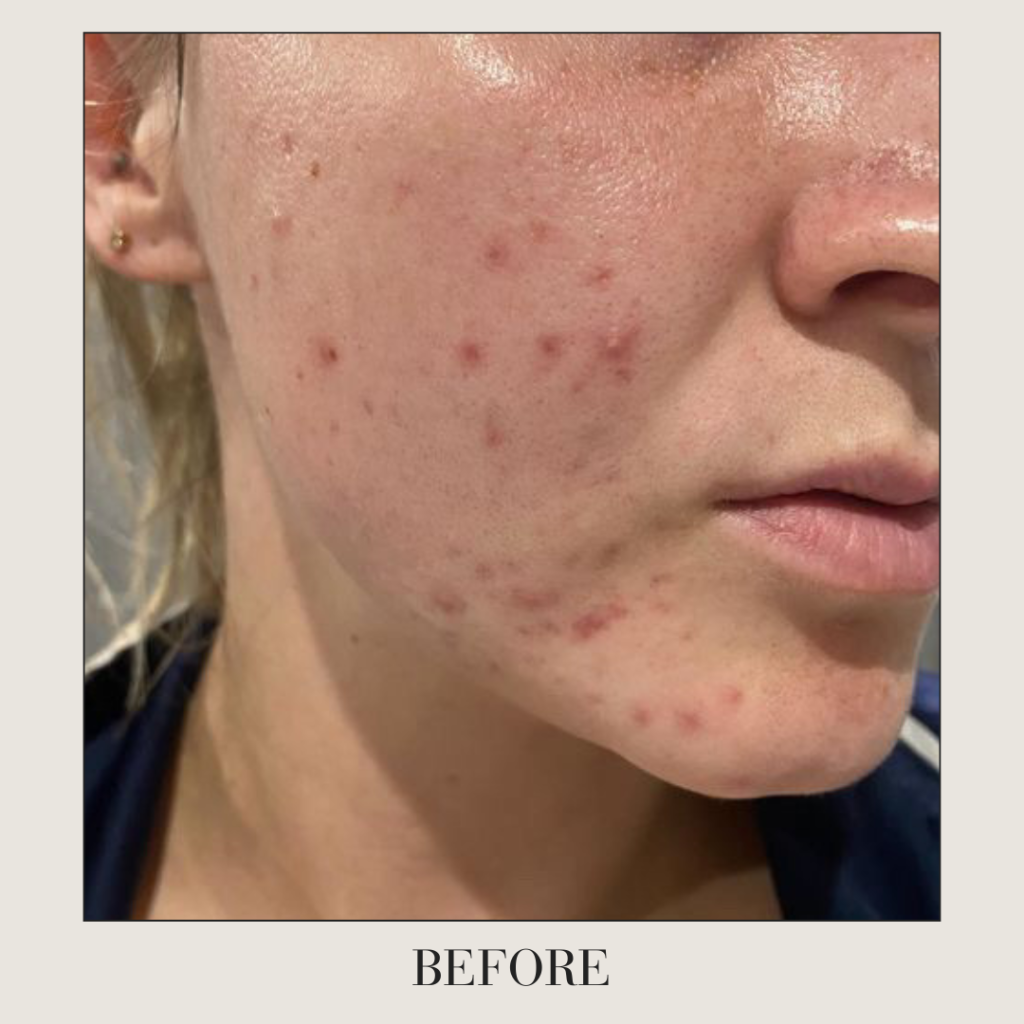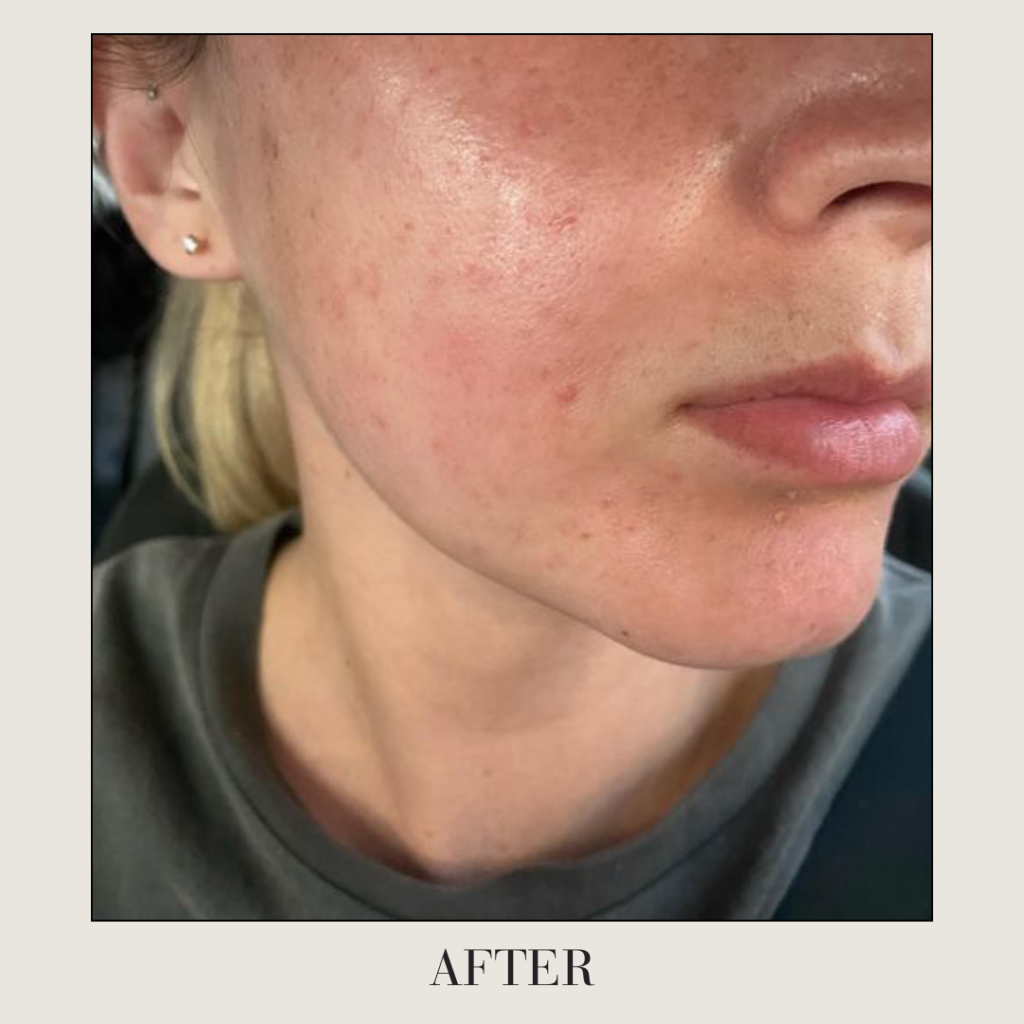

You’ve tried the serums. The routine everyone swears by. The $80 cleanser that promised clear skin in two weeks.
And you’re still breaking out.
It isn’t because you’re not trying hard enough. It isn’t because you’re doing something wrong. And it certainly isn’t because you haven’t spent enough money on it.
Acne in your 20s is rarely a cleanser problem.
Most of what’s sold to you is designed for teenage acne — surface bacteria, excess oil, a good cleanse and a spot treatment. But acne in your 20s is usually driven by something skincare alone can’t touch: hormonal fluctuation, gut health, stress, and a skin barrier that’s been damaged by over-treating it in the first place.
So you buy another product. It doesn’t work. You buy another one. Still nothing. And somewhere in there, you stop trusting your own skin — and start wondering if it’s just going to be like this forever.
It’s not.
What’s actually going on
Hormonal acne shows up in a pattern most generic skincare completely ignores:
- Jawline and chin breakouts that flare around your cycle
- Skin that’s oily in some areas and stripped-dry in others — usually from over-treating
- Breakouts that get worse before they get better when you switch products
- Redness and inflammation that lingers well after the spot itself is gone
None of that gets solved by a stronger acid or a trendier serum. It gets solved by working out why your skin is behaving this way — which takes an actual assessment, not a shelf of products.
Three things worth knowing before you buy anything else
1. More active ingredients isn’t a strategy. Layering acids, retinoids and spot treatments at once is one of the most common reasons acne-prone skin gets worse, not better. It strips the barrier that’s supposed to be protecting you, which leads to more inflammation — not less.
2. Purging and reacting are not the same thing. A short adjustment period with a genuinely suitable active is normal. Ongoing redness, stinging, or new breakouts in new places usually means the product isn’t right for your skin — not that you need to push through it.
3. Consistency beats intensity. The skin barrier takes roughly 4–6 weeks to rebuild once it’s been compromised. A gentler routine followed properly for that long will usually outperform an aggressive one you keep swapping out after a week.
Why “just try this” doesn’t work
Every influencer has a routine. Every skincare aisle has a bestseller. None of them know your skin.
That’s the part that gets missed: acne treatment isn’t one-size-fits-all, and treating the wrong cause with the right-sounding product is exactly why you’ve spent money for nothing. You don’t need more product. You need the right assessment.
At ANO, that starts with a proper skin consultation with one of our degree-qualified dermal clinicians — someone trained to work out what’s actually driving your breakouts before recommending anything. Here is how our acne treatment in Shepparton works.
What actually helps
Once we know what’s causing it, the plan usually includes some combination of:
- Rebuilding your skin barrier before treating the acne itself
- Targeted, clinical-grade actives — not the diluted versions sold over the counter
- A homecare routine that supports, rather than fights, whatever in-clinic treatment we recommend
- Honesty about what will and won’t shift quickly — because acne that’s taken months to build doesn’t clear in a week, and we’d rather tell you that upfront than have you disappointed later
We’d rather you understand exactly what’s happening in your skin than sell you a promise we can’t keep.
Start with a real answer, not another product
A skin consultation with our team is $50, fully redeemable against your treatment or homecare — because we don’t believe you should pay twice to find out what’s actually wrong.
Book a skin consultation, and let’s find out what your skin actually needs.